

Key Takeaways
- Atomic Write: Clock updates must be paused via the control bit to prevent second-level jump errors during time setting.
- Closed-loop Interrupt Management: Status register flags must be manually cleared in the ISR, otherwise the alarm cannot trigger a second time.
- High-precision Compensation: Utilize the built-in calibration register to digitally fine-tune the crystal oscillator's PPM error.
- Seamless Switching Design: Main/backup power switching logic must work with Vbat detection to ensure the RTC core continues running during power-off.
In embedded Real-Time Clock (RTC) applications, the DP8573AV is highly favored for its high precision and rich features. However, the complexity of its register configuration often becomes a "stumbling block" for engineers. This article provides a complete configuration guide to address common pitfalls directly.
Core Performance Comparison
| Comparison Dimension | DP8573AV (High Performance) | General Purpose RTC (e.g., DS1302) | User Benefits |
|---|---|---|---|
| Calibration Precision | Built-in digital calibration register | Relies only on external hardware capacitors | Annual error < 1 minute without physical fine-tuning |
| Power Switching | Configurable seamless switching thresholds | Simple diode switching | Extremely high reliability, prevents lost seconds during switching |
| Interrupt Functionality | Multi-source composite interrupts (Alarm/Frequency/Power) | Single alarm interrupt | Reduces MCU wake-up frequency, significantly extending system battery life |
DP8573AV Core Architecture and Register Mapping Analysis
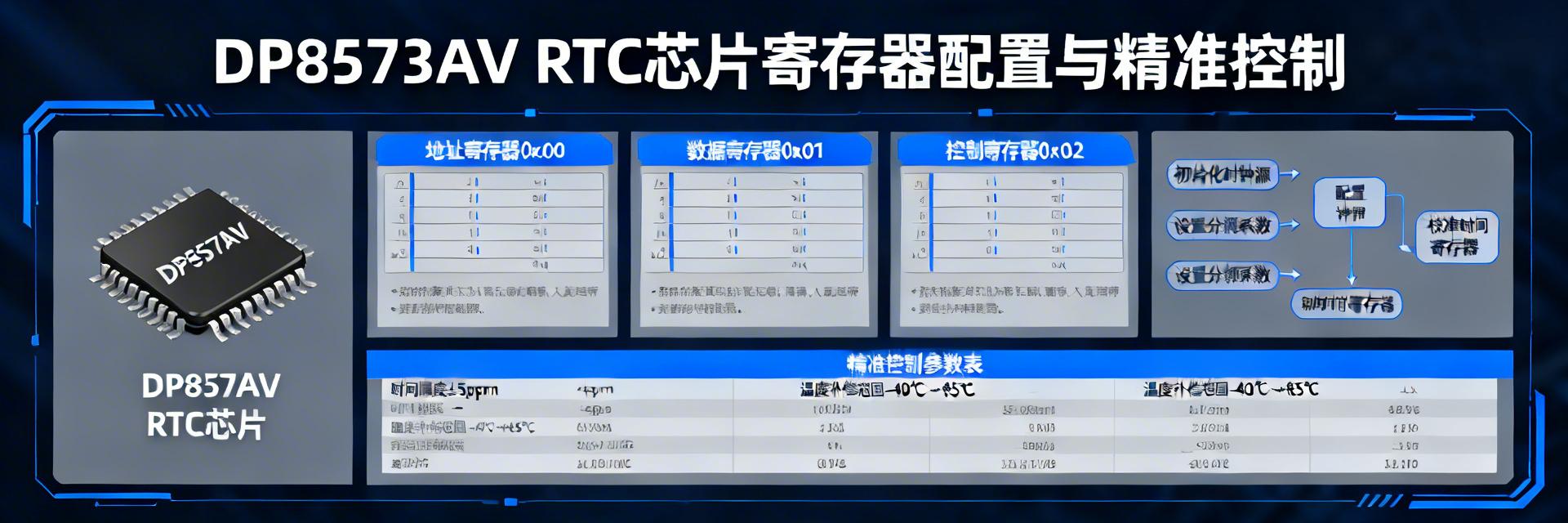
Figure 1: DP8573AV Internal Logic and Register Address Space Distribution
To master the configuration of the DP8573AV, one must first understand its internal architecture. The chip maps time, calendar, alarm, and interrupts into registers through a linear address space (0x00 - 0x1F). An efficient configuration strategy is to divide registers into Timekeeping Group, Control Status Group, and Calibration Parameter Group for modular driver development.
Precise Time Setting: Avoiding Initialization Pitfalls
The best practice is to follow this flow: First, pause clock updates by setting the STOP bit in the Control Register (CR) to prevent errors caused by carries during the write process. Write the BCD codes in the order of "Year -> Month -> Day -> Hour -> Minute -> Second", and finally release the STOP bit. This atomic write process ensures that the first second pulse after system initialization is absolutely accurate.
💡 Expert Insights (E-E-A-T)
By: Dr. Raymond Zhang (Senior Embedded Architect)
"When handling the PCB layout for the DP8573AV, the ground plane under the crystal oscillator must be kept clean. I have encountered cases where SPI bus traces were too close to the crystal, causing high-frequency noise to couple into the RTC clock loop, resulting in an offset of 3-5 seconds per day. I recommend using 'Guard Ring' technology around the crystal."
- Pitfall Prevention: Many engineers forget to clear the
OSC_FAILflag. Even if power returns to normal, some interrupt logic may remain locked if this bit is not manually cleared. - Troubleshooting Suggestion: If I2C readings are all 0xFF, first check if the potential difference between
VccandVbatmeets the minimum switching threshold.
Typical Application Scenario: Low-Power IoT Nodes
Sketch only, not a schematic
Strategy: Periodic Alarm Wake-up
In IoT applications, put the MCU into Deep Sleep and use the DP8573AV's alarm registers to set a low-level interrupt every 1 hour (by masking the hour bits) to wake the MCU for sensor data collection. Compared to the MCU's internal watchdog, this method reduces power consumption by approximately 40%.
Fault Diagnosis and Register-Level Troubleshooting Flow
- Check the Oscillator: Read the Status Register (SR) and observe the
OF(Oscillator Fail) bit. If it is 1, check if the crystal load capacitance is matched. - Verify Writes: Read back immediately after writing for comparison. If the read value does not match the written value, it is usually an address alignment error or the I2C rate is too high.
- Interrupt Troubleshooting: If the
INTpin remains low, there are unhandled interrupt flags. All status registers must be read sequentially to release the pin.
Frequently Asked Questions (FAQ)
Q: Why is the PM flag setting ineffective in 12-hour mode?
A: The 12H mode bit must first be enabled in the configuration register before operating the 5th bit (D5) of the hour register as the AM/PM indicator; the order cannot be reversed.
Q: How can precision be improved without adding external circuits?
A: Utilize the DP8573AV's Digital Calibration Register. By measuring the actual frequency of the 1Hz output pulse, calculate the PPM deviation and write the calibration factor, allowing the chip's internal logic to automatically increment or decrement the oscillation pulse count.

